

In the heart of Italy’s famed “supercar valley,” where legends like Ferrari, Lamborghini, and Pagani were born, a new name is making waves with a thunderous roar. Giamaro Automobili has unleashed the Krafla, a hypercar with specs so crazy they seem pulled from a fantasy. Named after a formidable Icelandic volcano, the Krafla is a fitting moniker for a vehicle that promises a truly explosive driving experience. With a claimed output of over 2,100 horsepower from a quad-turbo V12 engine, this new Italian hypercar is poised to redefine the limits of automotive performance.
In an automotive landscape slowly shifting to the silent hum of electric motors, the Krafla is a defiant, thunderous roar, a celebration of internal combustion at its most extreme. But in a world where promises of automotive excess are often just a mirage, can Giamaro Automobili truly deliver on its volcanic vision? Let’s take a closer look.
The Heart of the Beast: A Bespoke 7.0-liter Quad-Turbo V12
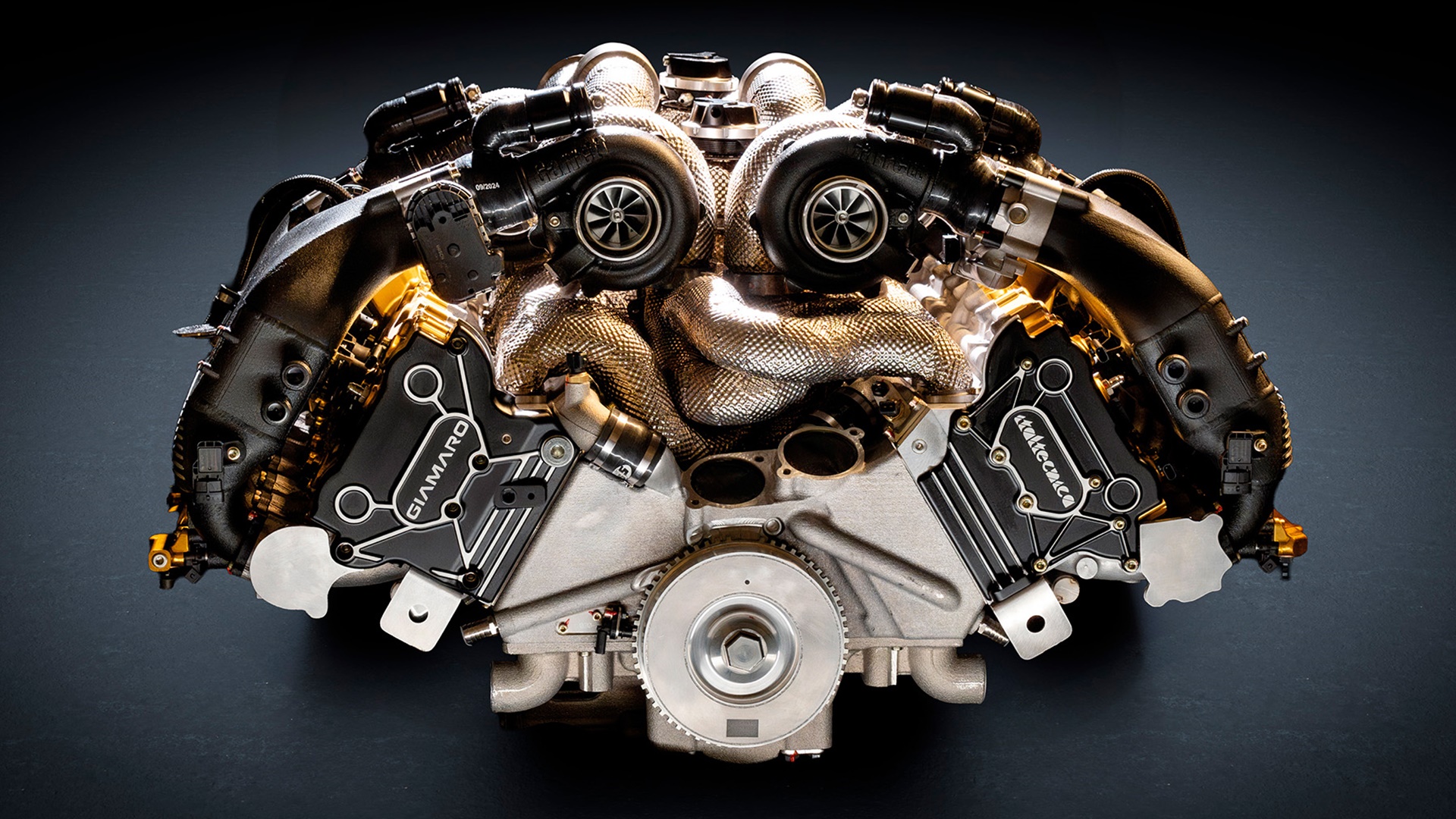
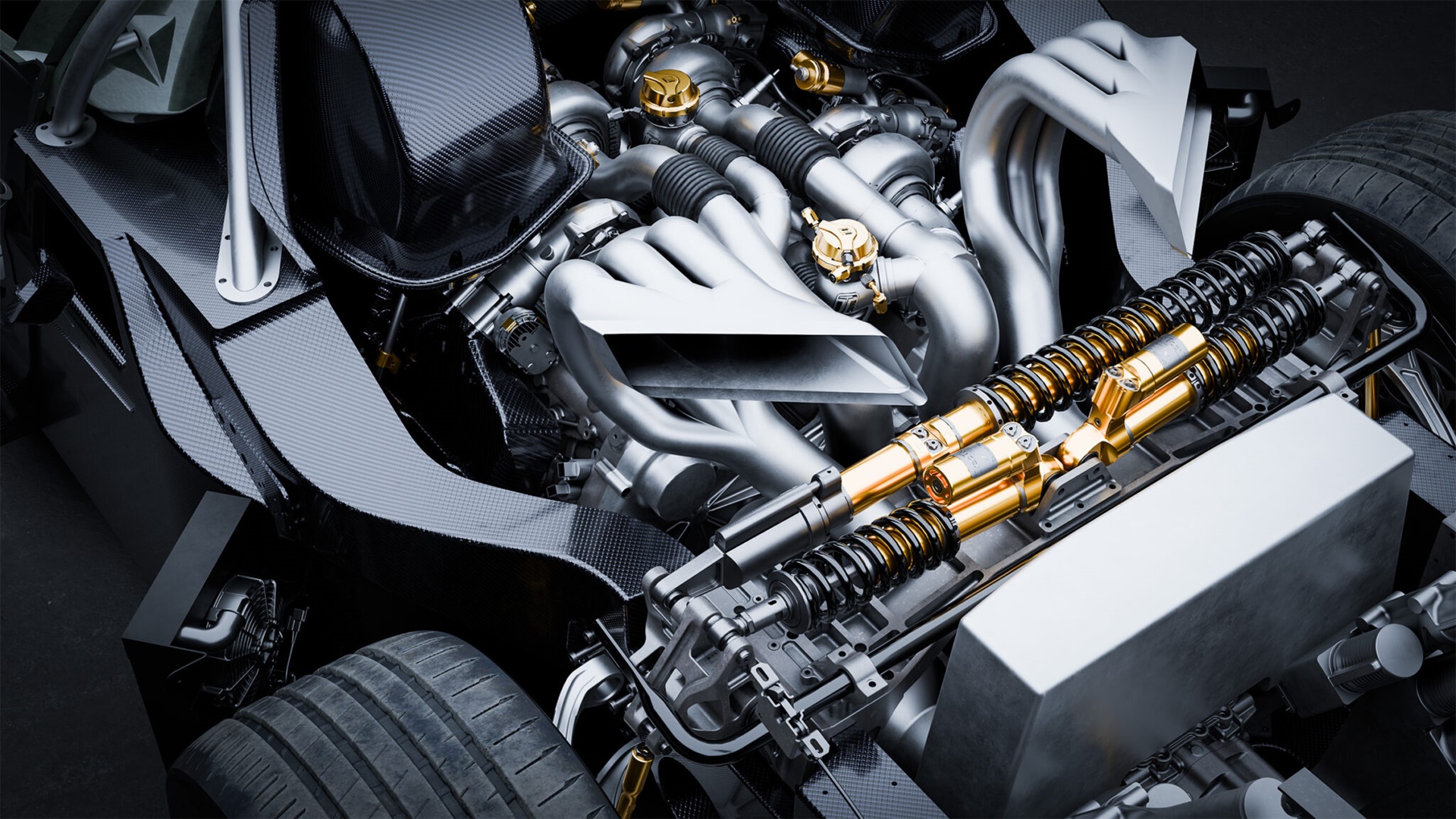
The soul of any hypercar is its engine, and the Krafla’s is nothing short of masterpiece. This isn’t an off-the-shelf powertrain borrowed from a larger manufacturer. Instead, Giamaro has engineered a bespoke 7.0-liter V12, a behemoth of an engine with four turbochargers. The result is a mind-bending 2,127 horsepower and nearly 1,500 lb-ft of torque, figures that place the Krafla in the elite automotive class.
To put that into perspective, the Bugatti Chiron Super Sport, a car that has long been a benchmark for hypercar performance, produces a “mere” 1,578 horsepower. The Krafla, on paper at least, is in a different league entirely.
But how does one tame such monstrous power? They used a similar system we’ve seen previously on the Dodge Hellcat, Bugatti Veyron and Chiron. A unique three-key system allows the driver to tailor the car’s performance to the situation.
- The White Key: Designed for normal driving, limiting its output to 400 to 800 horsepower.
- The Black Key: Unlocks 1,650 horsepower, a setting Giamaro describes as suitable for “town and country.”
- Red Key: This key unleashes the full, unadulterated fury of the Krafla’s 2,127 horses.
This power is sent to the rear wheels through a seven-speed CIMA automated manual gearbox, a transmission that offers the choice of paddle-shifting or a more traditional manual experience. For those who crave the absolute cutting edge of technology, Giamaro is also developing an 11-speed dual-clutch gearbox, a transmission that promises lightning-fast shifts and even greater performance.
A Masterclass in Engineering and Design: Carbon Fiber and Aerodynamics
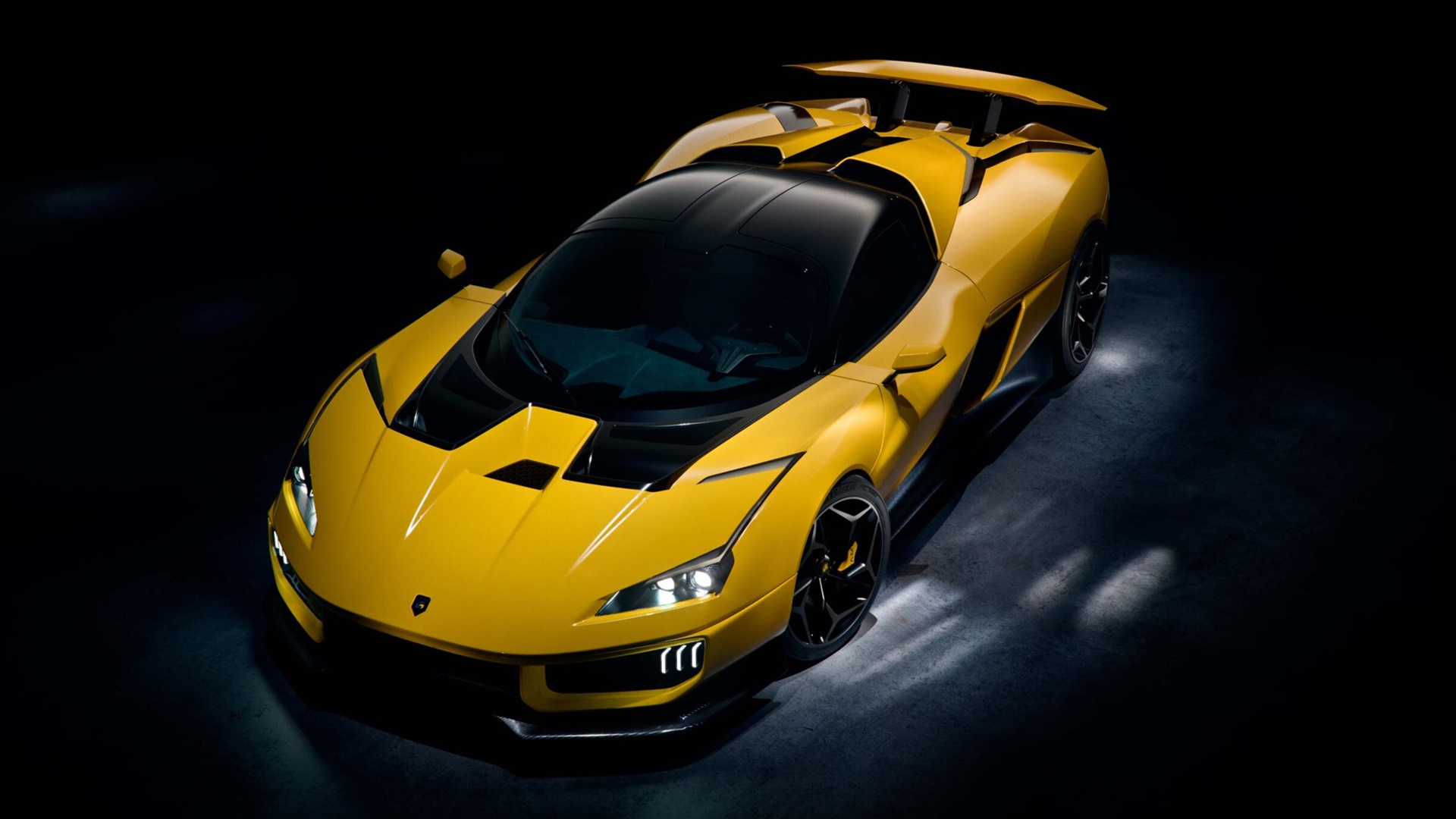
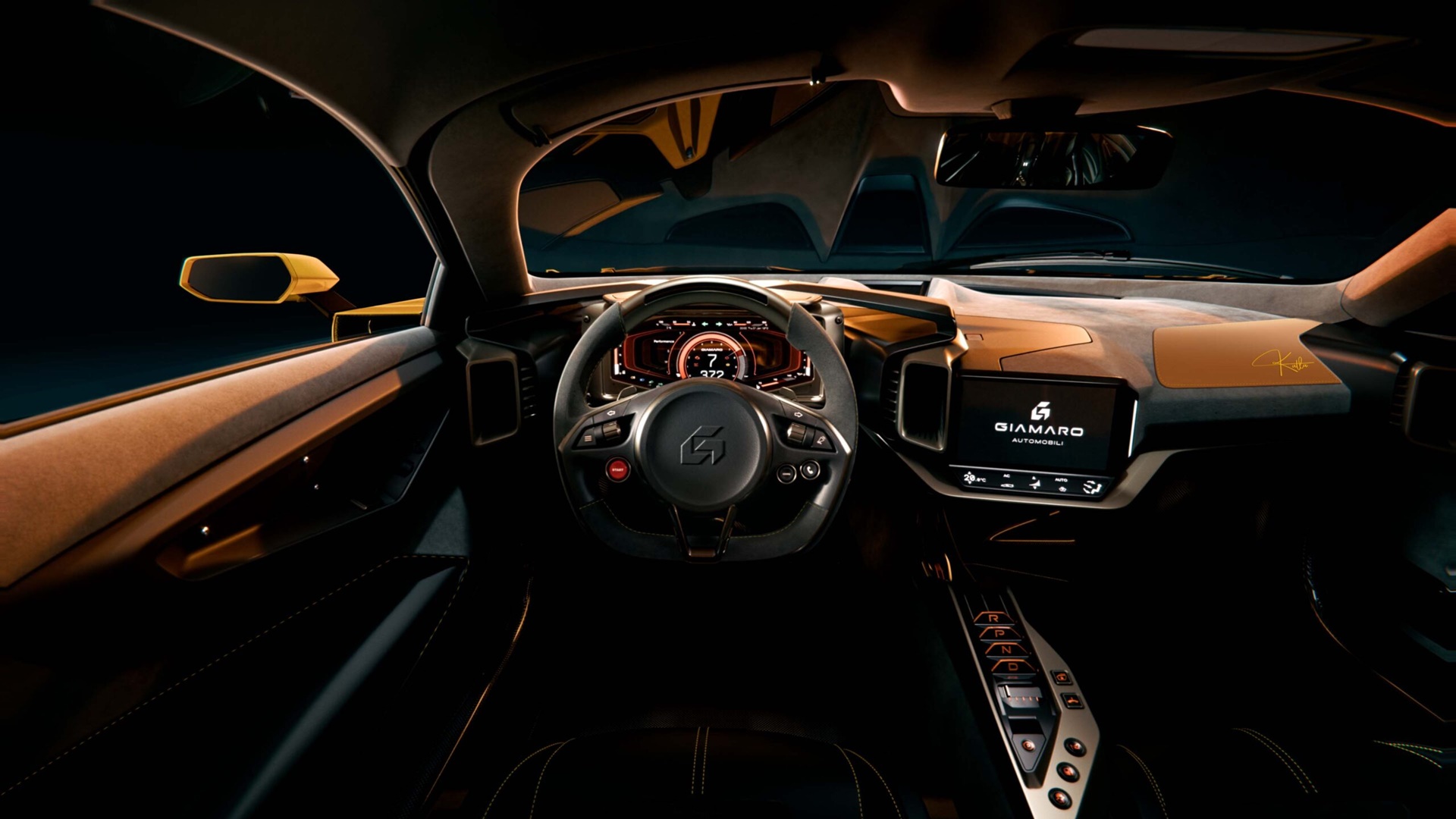
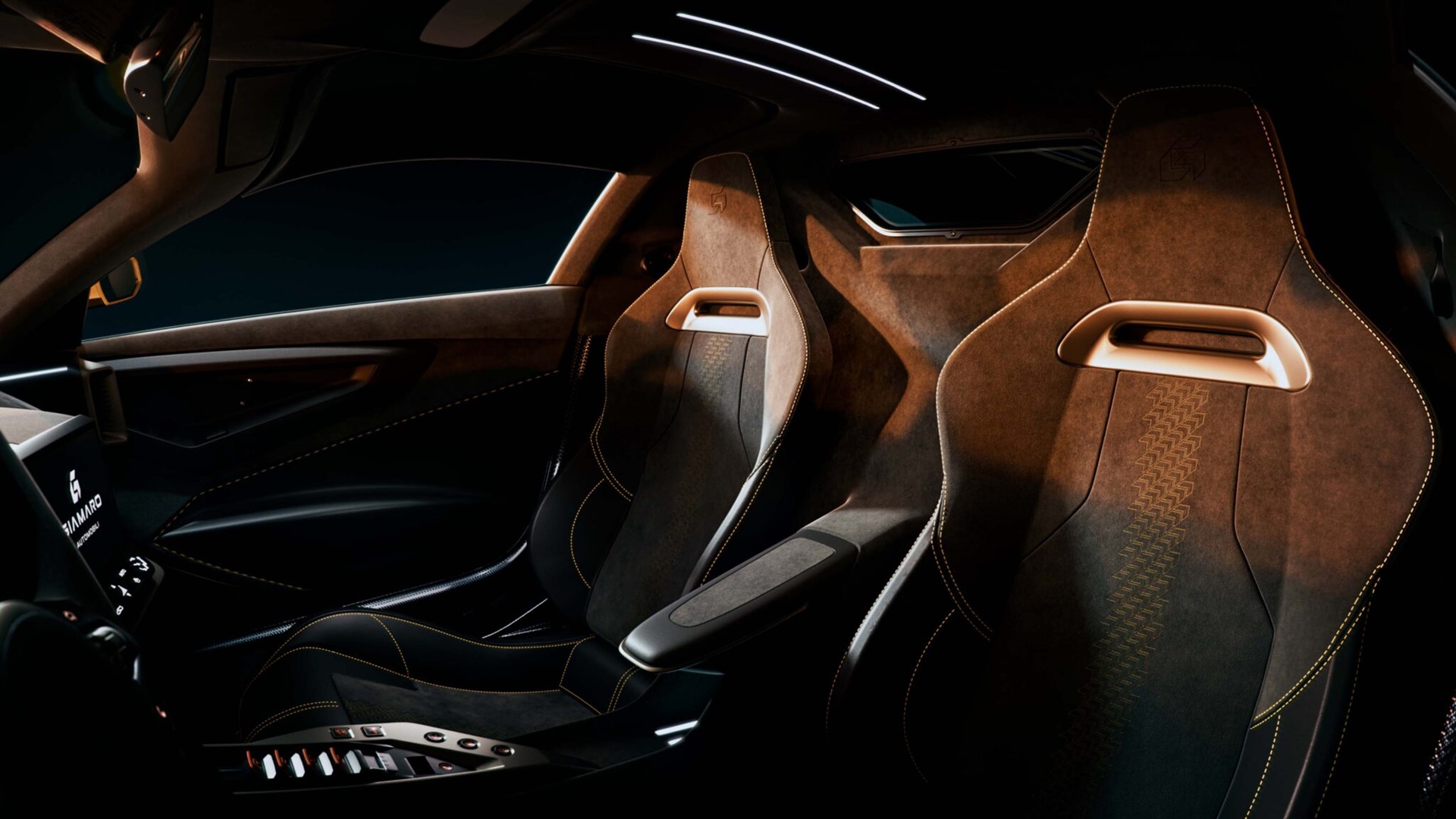
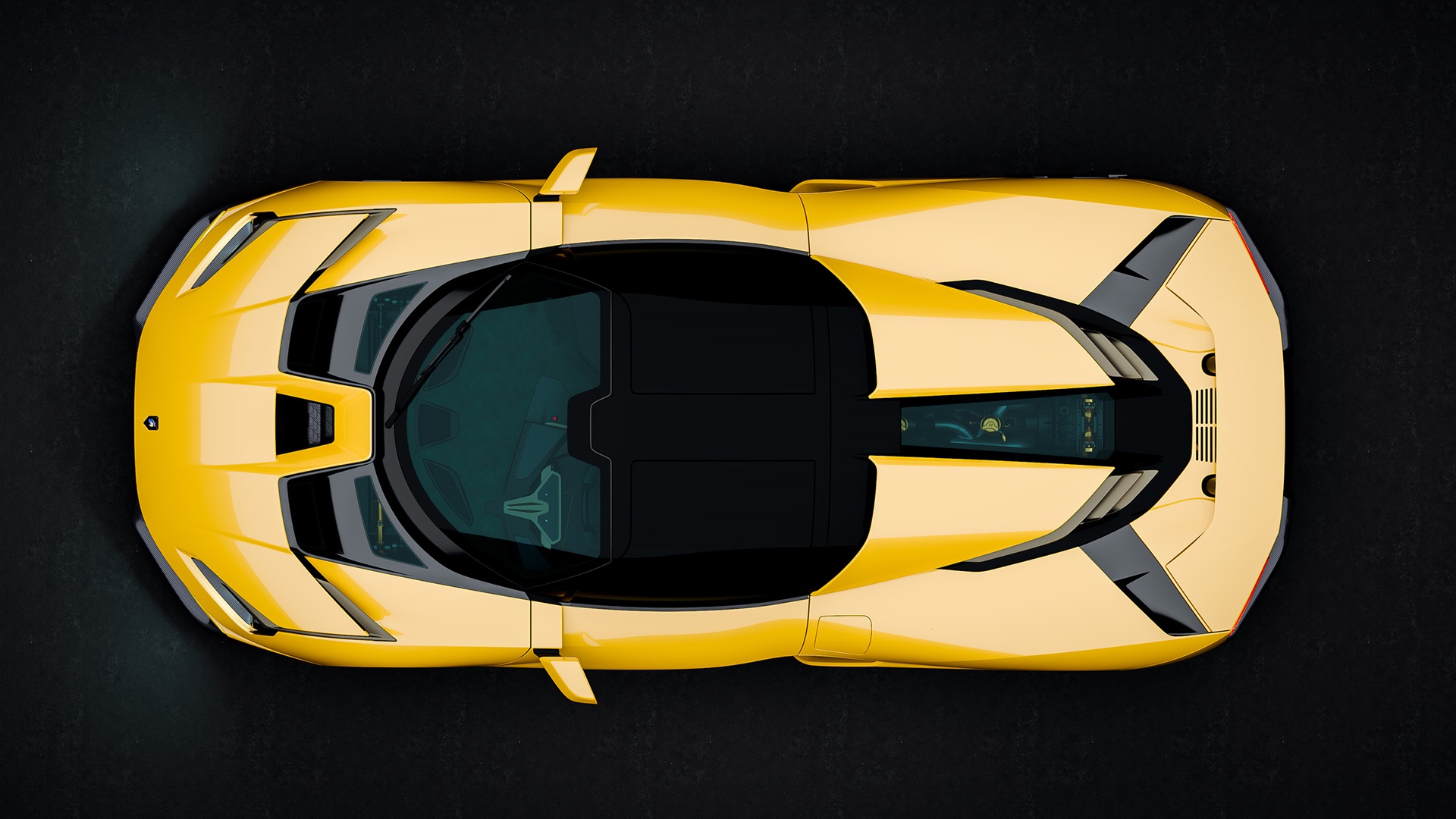
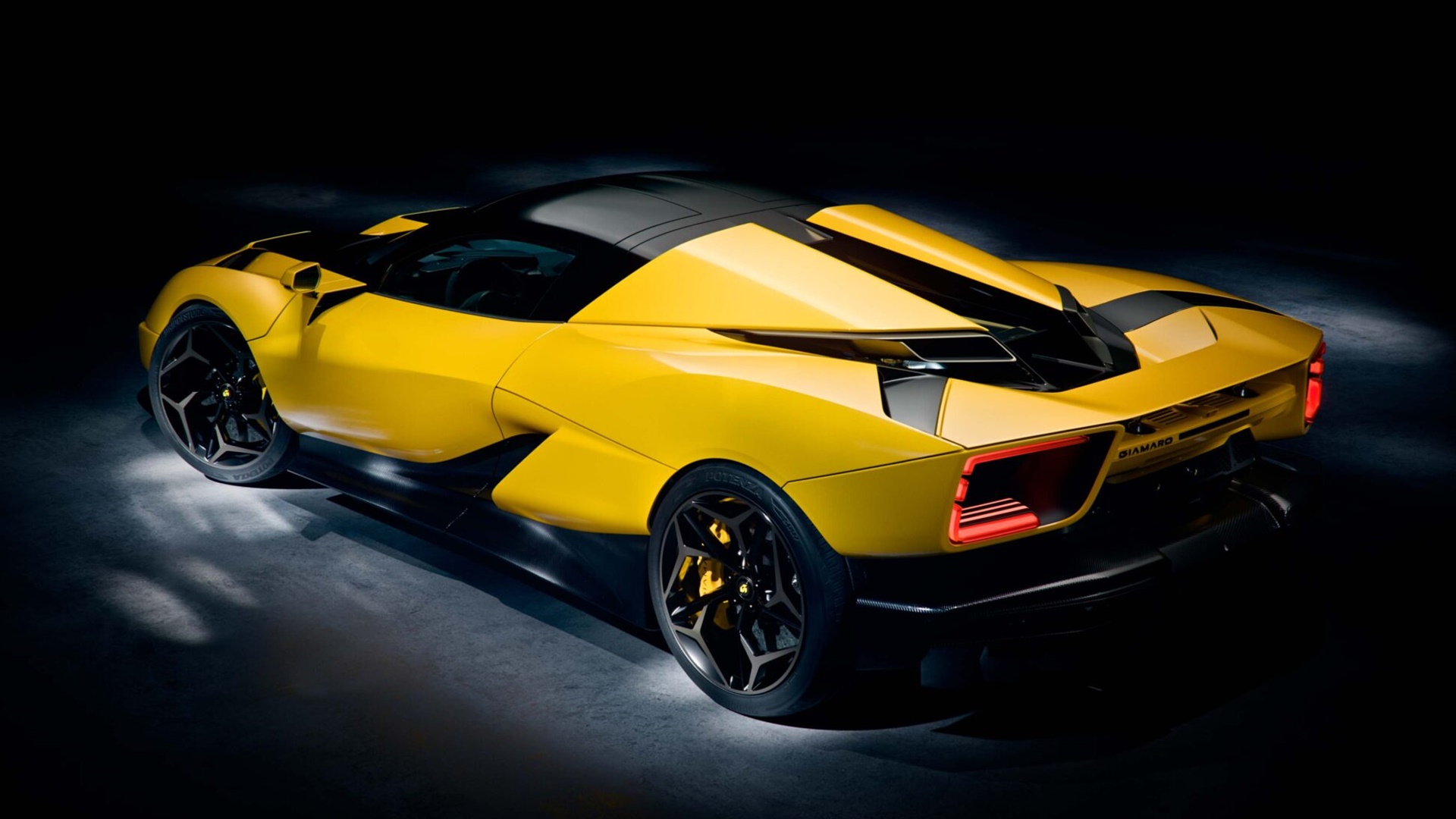
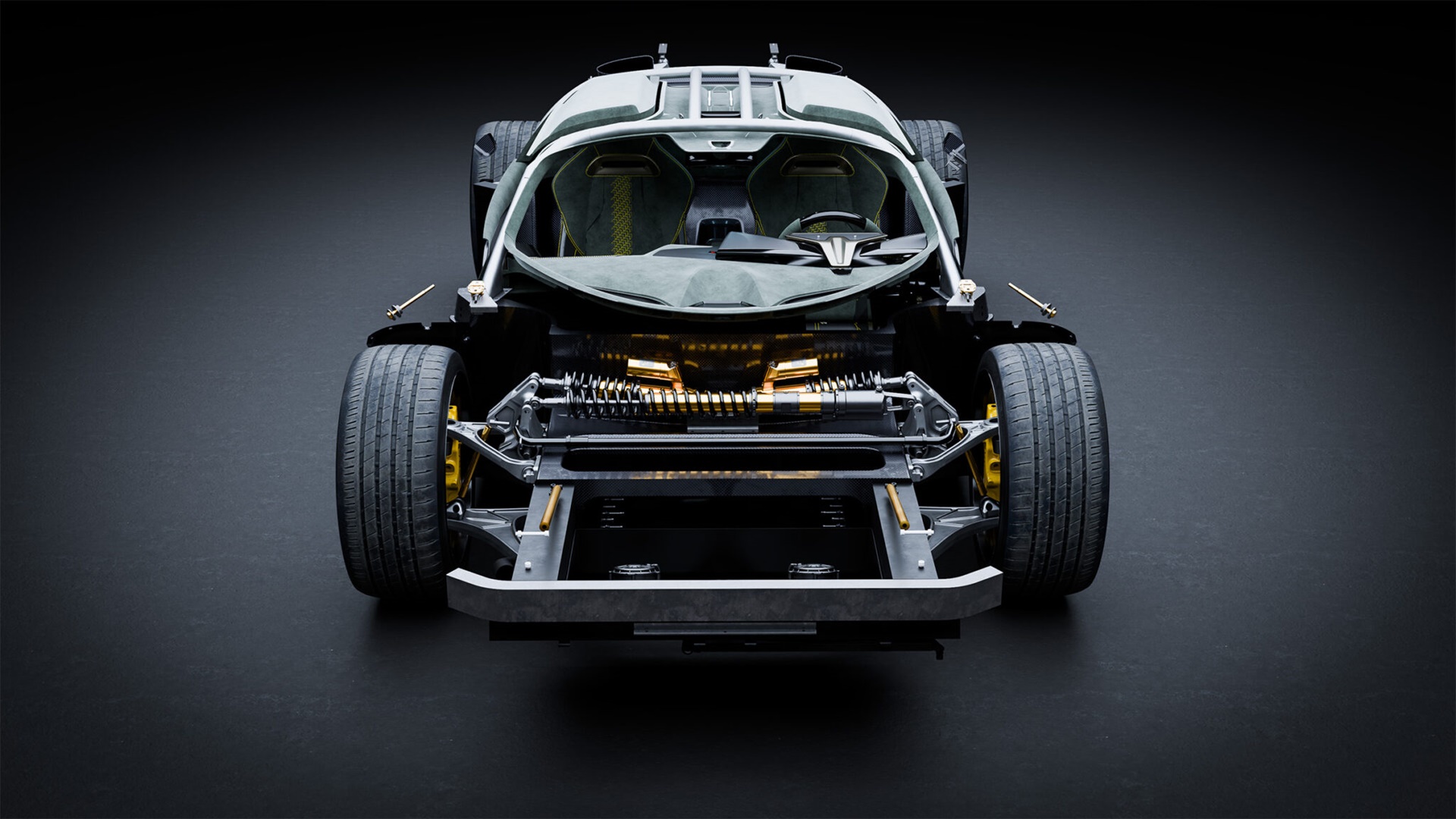


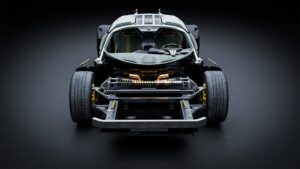
A car with this much power needs a chassis that can handle it, and Giamaro has spared no expense. The Krafla is built around a lightweight carbon fiber monocoque, the car’s structural core, which weighs a mere 375 pounds (170kg). This contributes to a total vehicle weight of under 3,307 pounds (1,500kg), an impressive figure for a car with such a massive engine. The result is a power-to-weight ratio that is, frankly, terrifying.
The suspension is a work of art in itself. It’s an active and intelligent system, with adjustable dampers and a “heave spring,” a third spring element that helps to control the car’s vertical movements, ensuring stability under hard acceleration and braking. This suspension technology sounds similar to Koenigsegg’s triplex suspension. The suspension components are CNC-machined from solid aluminum, a testament to the obsessive attention to detail that has gone into the Krafla’s creation. And when it’s time to slow down, massive carbon-ceramic brakes with 10-piston calipers are on hand to bring this land-based missile to a halt.
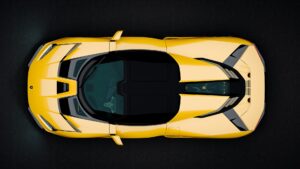
The exterior of the Krafla is as dramatic as its performance figures. The design is heavily inspired by fighter jets, with aggressive lines, numerous aerodynamic channels, and gaping scoops that channel air to cool the mighty V12. An active rear wing not only provides downforce but also doubles as an airbrake to aid in deceleration. The top-mounted exhausts, a unique and eye-catching design feature, are not just for show; they’re a key element of the car’s aerodynamic package, and they promise to deliver a soundtrack that will be nothing short of breathtaking.
Step inside the Katla, and you’re greeted by a cockpit that feels more like a fighter jet than a car. The high-tech, driver-focused interior features a digital dashboard and a steering wheel with an integrated rev counter. Despite its performance-oriented design, the Katla is not a stripped-out race car. The seats are surprisingly comfortable, making it a car that can be driven and enjoyed.
The Minds Behind the Madness

In the hypercar world, a compelling story and an impressive spec sheets are not enough. Credibility is everything, and this is where Giamaro Automobili makes a strong case for itself. The development of the Krafla is being overseen by Loris Bicocchi, a name that carries immense weight in the industry. Bicocchi is a legendary test driver who has been instrumental in the development of some of the most iconic cars of the past three decades, including the Bugatti EB110, Veyron, and Chiron, as well as working with Pagani and Koenigsegg. His involvement is a powerful endorsement of the Krafla project.
Furthermore, the founder of Giamaro Automobili is a former founding partner at Pagani, a company that has redefined the art of hypercar manufacturing. This deep well of experience and expertise is a clear indication that the Krafla is not just another poser; it’s a serious and well-funded endeavor.
Bespoke, Exclusive, and a Glimpse into a Wilder Future
Giamaro is not interested in mass production. Only 30 examples of the Krafla will ever be built, ensuring its rarity and exclusivity. But the personalization goes far beyond a limited production run. Each owner will have the opportunity to tailor their car to their precise specifications. This isn’t just about choosing the color of the paint or the type of leather for the seats; it’s about fine-tuning the car’s driving dynamics, from the throttle response and steering feel to the suspension setup. The goal is to create a car that is a true extension of its owner, a bespoke suit of carbon fiber and horsepower.
And in a move that demonstrates a playful and adventurous spirit, Giamaro has also unveiled a second model, the Albor. Based on the same platform and engine as the Krafla, the Albor is a “lifted and rugged” off-road version of the hypercar. It’s a “safari-style” creation that is as unexpected as it is intriguing. It’s a clear signal that Giamaro is not afraid to think outside the box and have a little fun.
A New Hypercar King in the Making?
The Giamaro Automobili Krafla is a car that is impossible to ignore. It’s a machine of staggering ambition, a hypercar that seems to have been designed with the express purpose of rewriting the rulebook. The numbers are almost unbelievable, the design is breathtaking, and the team behind it has the pedigree to back up its bold claims.
Of course, there are still questions to be answered. The world of boutique hypercar manufacturers is a notoriously difficult one, and many ambitious projects have failed to make it to production. The challenges of homologation, emissions regulations, and the sheer complexity of building a car of this caliber are immense.
But there is a sense of genuine excitement surrounding the Krafla. The presence of working prototypes, the involvement of industry legends like Loris Bicocchi, and the experienced team within the company all suggest that this is a project with a very real chance of success.
The Giamaro Automobili Krafla is a car that dares to dream. It’s a celebration of the internal combustion engine, a testament to the enduring appeal of raw, untamed horsepower. Whether or not it will ultimately claim a place among the elite class of hypercar greats remains to be seen. But one thing is for sure: a new volcano is rumbling in Italy’s supercar valley, and when it erupts, the world will be watching.


